Product · Dec 18, 2025 · 10 min read
PromptQL Alternatives: Best AI Data Query Tools for Teams (December 2025)

You need AI data query tools that your team can actually use, not ones that sit in a backlog for months while engineers build semantic layers. PromptQL offers strong query transparency and deterministic execution, but it lacks a free tier, requires manual setup, and keeps results siloed in a chat interface. If you're looking for PromptQL alternatives that get your team querying data faster—with options to embed, share, and distribute insights—this breakdown covers the tools worth considering in December 2025.
Key Takeaways (TLDR)
- AI data query tools let non-technical teams ask questions in plain English instead of SQL
- PromptQL requires weeks of manual setup; CamelAI connects to your warehouse in minutes
- Most tools trap insights in dashboards; embeddable options let you query data in Slack or Teams
- CamelAI learns your business context automatically from usage, eliminating semantic layer setup
- Y Combinator-backed CamelAI offers API access and deploys in a day with SOC 2 Type II security
What is PromptQL and How Does It Work?
PromptQL functions as a data agent for building workflows where accuracy is critical. Instead of simply predicting SQL, it uses agentic query planning. This method separates the planning phase—where the AI reasons about the query—from the execution phase. This structure reduces errors common in LLMs by ensuring query logic is visible and verifiable before running.
Core Architecture and Execution
The system generates multi-step query plans in a domain-specific language. These plans execute outside the model, supporting data retrieval and computation. By isolating reasoning from execution, PromptQL allows technical teams to review the path to an answer.
Connectivity and Semantic Layer
PromptQL connects to databases and SaaS applications via Hasura connectors. It introspects schemas, code, and documentation to build a semantic layer. This layer requires upfront setup but helps the tool understand organizational terminology and business context over time.
User Workflow
Designed for data analysts, PromptQL offers granular control over data operations. Users can view and modify query plans prior to execution. While this transparency aids technical users, the workflow is self-contained; results remain within the interface, offering fewer options for external sharing or embedding compared to other tools.
Why Consider PromptQL Alternatives?
PromptQL suits technical teams requiring explainable query plans and deterministic execution. It serves engineers needing granular control over agentic workflows rather than general business users.
However, several factors drive teams to seek PromptQL alternatives:
Access and Pricing: PromptQL pricing structure lacks transparency. There is no free tier or self-service option, meaning teams cannot test the software without a sales-gated onboarding process. This prevents rapid deployment.
Limited Distribution: The tool does not offer an embeddable UI or headless API for customer-facing products. It also lacks integration with standard communication channels like Slack or Microsoft Teams, keeping insights trapped within a siloed interface.
Restrictive Outputs: While effective for chat-based answers, it cannot generate multi-tab Excel sheets, PowerPoint presentations, or dashboard apps.
Manual Configuration: The semantic layer demands heavy manual setup to capture business context. Unlike other AI data query tools that learn automatically from usage, this requires ongoing engineering maintenance to keep schemas current. AI analysts predict that such requests can take weeks or months to process when data engineering teams must manually update semantic layers for new analysis requirements.
Best PromptQL Alternatives in December 2025
CamelAI: Best Overall Alternative
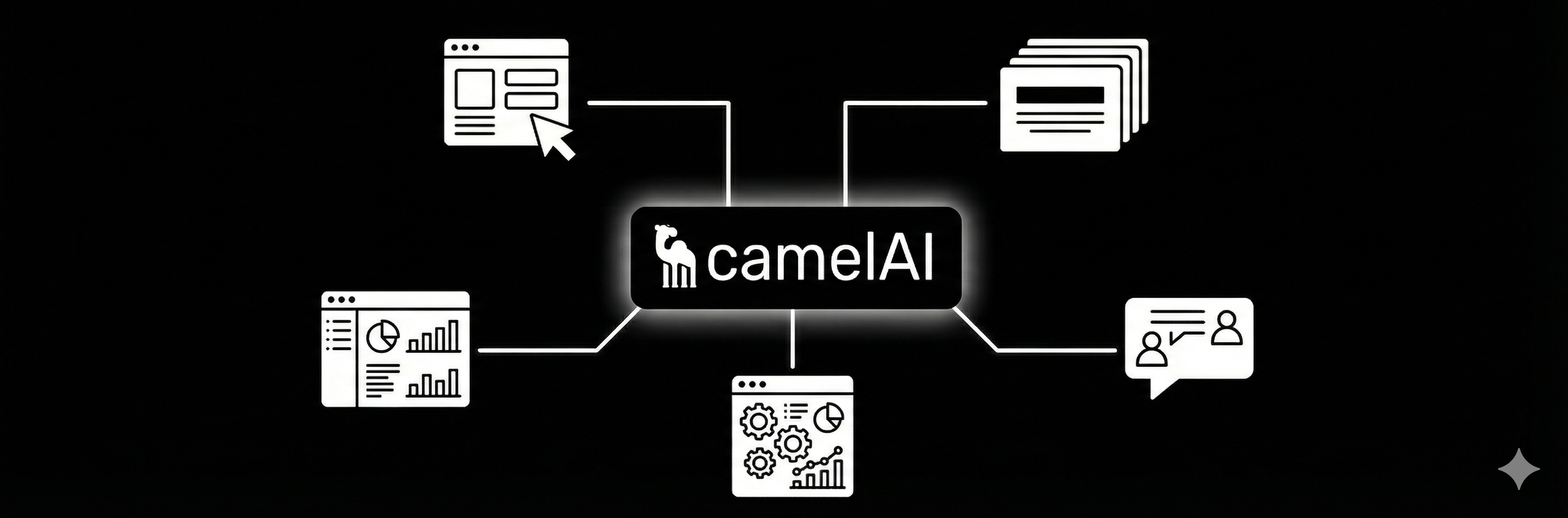
CamelAI is an AI-powered data analyst that connects directly to your data warehouse to answer questions in plain English. Unlike PromptQL alternatives that require you to build a complex semantic layer before you can ask a question, CamelAI indexes your schema automatically.
You can connect sources like Snowflake, BigQuery, or chat with PostgreSQL database and start asking questions immediately. CamelAI provides the SQL and Python code behind every answer, giving you full transparency and trust in the results.
Key Features:
- Zero-Setup Architecture: Reads your schema and learns your data structure without manual modeling
- Enterprise Security: Your data remains in your environment; does not train on your data; SOC 2 Type II compliant
- Multi-Format Outputs: Generate persistent dashboards, CSVs, and charts from a single conversation
- API-First Design: Embed conversational agent directly into your own applications or internal tools
Best for: Teams that want to query data instantly without waiting for engineers to configure models.
Tableau
Tableau is a visualization leader that uses drag-and-drop interfaces to build complex dashboards. It connects to massive datasets and offers granular control over how data appears.
Strengths:
- Extensive library of chart types
- Handles large datasets effectively
- Strong community and talent pool
Best for: BI teams needing to create static, pixel-perfect executive reports.
Limitation: Powerful for visual reporting but fails as a quick data query tool. It requires technical training to use effectively, unlike natural language interfaces.
Microsoft Power BI
Power BI integrates analytics deeply into the Microsoft ecosystem. It offers "Copilot" features that allow for some natural language interaction, provided the data has been rigorously modeled beforehand.
Strengths:
- Deep integration with Excel and Teams
- Low cost for existing Microsoft users
- Power Query for data transformation
Best for: Microsoft-centric organizations with established data teams to manage models.
Limitation: Works well for reporting on pre-built datasets. However, it shares the manual configuration burden of PromptQL, requiring significant engineering time before users can ask simple questions.
ThoughtSpot
ThoughtSpot uses a search-engine interface for analytics. It allows users to query data using keywords, similar to using Google, rather than SQL or drag-and-drop.
Strengths:
- Keyword-driven search bar
- "SpotIQ" for automated anomaly detection
- Embedding capabilities
Best for: Organizations that prefer structured keyword search over conversational dialogue.
Limitation: Its keyword-syntax approach lacks the nuance and flexibility of true conversational AI.
Julius AI
Julius AI acts as a Python interpreter for your files. It allows users to upload spreadsheets and run analysis using natural language commands that trigger Python scripts.
Strengths:
- Analyzes CSV, Excel, and Google Sheets
- Visualizes data through Python libraries
- Creates repeatable analysis workflows
Best for: Individual analysts running data science tasks on local files.
Limitation: Great for ad-hoc file analysis. However, it lacks the live, secure warehouse connectivity required for team-based enterprise data querying.
Feature Comparison: PromptQL vs Top Alternatives
Functional Breakdown Table
| Feature | PromptQL | CamelAI | Power BI | ThoughtSpot | Julius AI |
|---|---|---|---|---|---|
| Natural Language Querying | Yes (via query plan) | Yes (conversational SQL) | Limited (Q&A tool) | Yes (search-based) | Yes (python context) |
| Deployment Speed | Weeks (requires config) | Instant (connects in minutes) | Weeks (semantic models) | Weeks (setup required) | Immediate (files) |
| Continuous Learning | Semantic layer feedback | Automatic per team | Manual updates | Manual synonyms | Paid upgrade |
| Embeddable UI | No | Yes (API & Components) | Limited | Yes | No |
| Output Formats | Chat artifacts | Charts, CSV, SQL, dashboards | Reports | Charts, dashboards | Notebook code |
| Multi-Source Data | Yes (Hasura DDN) | Yes (via MCP) | Requires modeling | Limited | Single source |
| Query Transparency | Modifiable plans | Reviewable SQL | Hidden in model | Hidden in search | Visible code |
| Setup Complexity | High | Low (Schema-read) | High | Medium | Low (files) |
| Free Tier | No | Yes | Yes (limited) | No | Yes |
Key Differences in Architecture
The main friction point for most teams is the requirement for extensive semantic modeling. PromptQL and Power BI require engineers to define business logic and relationships before anyone can ask a question. This front-loaded work often delays access by weeks.
CamelAI takes a different approach by reading the database schema directly. It allows for instant AI data query capabilities on secure, production-grade databases without manual modeling. While Julius AI offers similar speed for individual files, it lacks the infrastructure to handle live database connections for teams.
Distribution also separates these tools. PromptQL forces users to visit a specific destination to get answers, creating data silos. CamelAI offers an API and embedding options, allowing you to place the data agent directly into your internal apps or SaaS products so users can query data where they already work.
Why CamelAI is the Best PromptQL Alternative
PromptQL prioritizes transparency through explainable query plans, helping technical teams validate logic. However, this often requires trading speed for control. Given that organizations with high BI adoption are 5 times more likely to make faster decisions and AI-driven BI tools bring a 25% improvement in operational efficiency, deployment speed matters significantly.
For more insights on AI analytics, see our blog.
PromptQL frequently demands weeks of manual semantic modeling, whereas CamelAI gets teams running in days. CamelAI replaces heavy upfront configuration with continuous validation, allowing you to verify outputs without engaging in a long engineering project.
The difference extends to how AI data query tools learn business context. Instead of engineers manually mapping definitions, CamelAI's system indexes your schema and captures organizational terminology automatically. An initial 30-prompt training period establishes a baseline, then improves accuracy with every query. This allows the semantic layer to grow with your team, a key advantage over PromptQL alternatives that depend on static configuration.
Finally, CamelAI solves the distribution problem. PromptQL generally keeps results as chat artifacts inside the interface. CamelAI lets you turn analysis into interactive web apps, slide decks, and persistent dashboards. You can embed these insights directly into Slack, Teams, use the web app, or build your own web apps and data products in natural language to make data accessible where your team works.
Final Thoughts on PromptQL Alternatives for Your Team
PromptQL gives technical teams explainable query plans, but the weeks of manual setup and sales-gated onboarding slow deployment. AI data query tools that connect directly to your warehouse let you ask questions today while showing you the SQL behind every answer. You keep the transparency without the configuration burden. Connect your data and start querying to see how much faster your team can move.
FAQ
Why do teams look for PromptQL alternatives?
Teams typically seek alternatives due to PromptQL's lack of transparent pricing, absence of a free trial, long and manual setup process, and limited distribution options—it doesn't embed into existing tools or integrate with Slack and Teams, keeping insights siloed within a single interface.
What should you prioritize when comparing AI data query tools?
Focus on deployment speed (can you connect and query immediately?), query transparency (can you see and verify the SQL?), and distribution flexibility (can you embed results into your existing workflows or products?).
When should you consider moving away from a tool that requires heavy semantic modeling?
If your team is waiting weeks to access data because engineers must manually configure business logic before anyone can ask questions, or if maintaining those models consumes more time than the insights are worth.
How does CamelAI differ from PromptQL's query planning approach?
While PromptQL generates modifiable query plans that require review before execution, CamelAI reads your database schema automatically and provides transparent SQL with every answer—giving you verification without the upfront configuration burden.
Can you test CamelAI before committing to a paid plan?
Yes, CamelAI offers a free tier that lets you connect your data sources and start querying immediately, unlike PromptQL which requires sales-gated onboarding before you can evaluate the product.